
Uncategorized
Best Diet for Backyard Chickens: What to Feed and What to Avoid
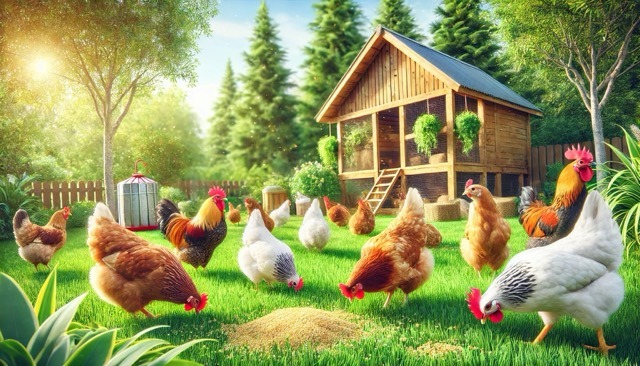
Raising backyard chickens is a rewarding experience, and one of the most important responsibilities you’ll have is ensuring they get the right nutrition. A balanced diet is essential for their health, productivity, and overall happiness. Whether you’re new to chicken keeping or looking to refine your flock’s nutrition, understanding what to feed and what to avoid will help your chickens thrive.
What to Feed Your Backyard Chickens
A healthy chicken diet consists of a variety of grains, proteins, vitamins, and minerals. Here’s a breakdown of the best foods to provide your backyard flock:
1. Commercial Layer Feed
The cornerstone of your chickens’ diet should be a high-quality commercial layer feed. These feeds are specially formulated with the right balance of protein, calcium, and other nutrients needed for egg production and overall health. They come in various forms such as pellets, crumbles, or mash, and typically contain around 16% protein, which is ideal for laying hens.
2. Grains and Seeds
Chickens enjoy a variety of grains like corn, wheat, oats, and barley. These grains provide energy and help keep your chickens feeling full. You can offer whole grains as part of their scratch feed, which is a supplemental treat rather than a primary food source.
3. Vegetables and Greens
Leafy greens and vegetables are excellent sources of vitamins and minerals for your chickens. Some of their favorite greens include spinach, kale, lettuce, and cabbage. You can also offer them vegetable scraps from your kitchen, like carrot tops, broccoli, zucchini, or cucumbers. Just ensure that any vegetables you give are fresh and pesticide-free.
4. Protein-Rich Foods
Protein is vital, especially during the molting season or for growing chickens. Besides the protein in layer feed, you can supplement their diet with insects like mealworms, black soldier fly larvae, or scrambled eggs. Chickens also love to forage for bugs and worms in your yard, which provides natural protein.
5. Calcium Sources
For egg-laying hens, calcium is essential to produce strong eggshells. A deficiency can lead to soft-shelled or misshapen eggs. Crushed oyster shells or limestone grit are commonly used as calcium supplements. You can also offer crushed eggshells, just be sure they’re thoroughly cleaned and baked first to avoid bacteria.
6. Fruits
Chickens love fresh fruit, and it can be a healthy treat when given in moderation. Some favorites include berries, apples (without seeds), watermelon, and bananas. However, fruit should not replace their main feed and should be given sparingly due to its high sugar content.
7. Grit
Chickens don’t have teeth, so they rely on grit to help grind up their food in their gizzard. If your chickens are free-ranging, they may find natural grit in the form of small stones or sand. For chickens kept in a coop or run, providing commercial grit is important for their digestion.
Foods to Avoid Feeding Your Chickens
While chickens are not particularly picky, there are certain foods that can be harmful or even toxic to them. It’s crucial to know what to keep out of their diet to avoid health problems.
1. Raw or Dried Beans
Uncooked beans contain a compound called lectin, which can be toxic to chickens. If you want to offer beans, be sure to thoroughly cook them first to remove any harmful substances.
2. Avocado (Especially the Pit and Skin)
Avocado contains persin, a fungicidal toxin that can cause respiratory issues, heart problems, or even death in chickens. While the flesh of the avocado is less toxic, it’s best to avoid feeding any part of the avocado, especially the pit and skin.
3. Green Potatoes and Tomato Leaves
Both potatoes and tomatoes belong to the nightshade family and can contain solanine, a harmful substance found in green or sprouted potatoes and the leaves of tomato plants. Be sure to remove any green or sprouted potatoes from your kitchen scraps before offering them to your chickens.
4. Chocolate
Like many animals, chickens should never eat chocolate, as it contains theobromine, a compound toxic to them. Chocolate can cause heart problems, digestive issues, and in severe cases, death.
5. Moldy or Spoiled Food
Never feed your chickens moldy or spoiled food. Chickens are sensitive to bacteria and toxins found in rotting food, which can lead to illness. Always check the freshness of kitchen scraps before tossing them into the coop.
6. Salty and Sugary Foods
Foods that are high in salt or sugar, such as processed snacks, chips, or sugary cereals, are not suitable for chickens. Excessive salt can lead to dehydration and kidney problems, while too much sugar can disrupt their digestion and lead to obesity.
7. Citrus Fruits
While not necessarily toxic, citrus fruits like oranges and lemons can interfere with calcium absorption and may affect egg production. It’s best to limit or avoid feeding citrus to your flock.
8. Onions and Garlic in Excess
Onions contain a compound called thiosulfate, which in large quantities can cause hemolytic anemia in chickens. While garlic is less problematic and can even have some health benefits in small amounts, it should still be used sparingly.
Conclusion
Feeding your backyard chickens a well-balanced diet is key to keeping them healthy and productive. A mix of commercial layer feed, grains, fresh vegetables, and the occasional treat will ensure they get the nutrients they need. Always be mindful of what you’re feeding your flock, and avoid harmful or toxic foods that could put their health at risk. By providing the right diet, your chickens will reward you with delicious eggs, a happy presence in your backyard, and many years of companionship.
Take good care of your flock, and they’ll take good care of you!
Chicken Coop Designs: How to Make Your Chicken Coop More Eco-Friendly


If you’re passionate about raising chickens and living sustainably, creating an eco-friendly chicken coop is a great way to reduce your environmental impact. Whether you’re building a coop from scratch or looking to upgrade an existing one, here are several ways you can make your chicken coop more eco-friendly while providing a healthier environment for your feathered friends.

1. Build with Sustainable Materials
The foundation of any eco-friendly chicken coop starts with the materials used. Opt for sustainable, durable, and non-toxic materials to ensure your coop is both environmentally conscious and long-lasting. Some eco-friendly building options include:
- Reclaimed wood: Repurposing old wood reduces the demand for new lumber, cutting down on deforestation and carbon emissions from manufacturing.
- Bamboo: Known for its rapid growth and renewable nature, bamboo can be an excellent material for certain elements like roosting bars.
- Natural insulation: Use eco-friendly insulation materials like sheep’s wool or recycled cotton to keep the coop warm in the winter and cool in the summer without relying on synthetic options.
2. Incorporate Solar Power
Reduce your reliance on electricity by using solar energy to power lighting, heating, and even automatic feeders. Solar-powered lights can provide gentle illumination inside the coop and around the yard without increasing your energy bill. For colder climates, solar heaters can help regulate temperature without consuming electricity.
3. Optimize Natural Ventilation and Lighting
Design your chicken coop to take full advantage of natural light and airflow, which reduces the need for artificial lighting and ventilation systems. Some ways to achieve this include:
- Windows and skylights: Properly placed windows and skylights allow natural sunlight to light the coop during the day, helping to reduce electricity usage.
- Cross ventilation: Install vents on opposite sides of the coop to allow fresh air to circulate naturally. This helps keep the coop cool in summer and reduces the need for electric fans.
4. Harvest Rainwater
A rainwater collection system is an excellent way to provide fresh, natural water for your chickens without relying on tap water. Set up gutters along the roof of your coop and connect them to a rain barrel or other water storage system. Just be sure to include a filtration system to ensure the water is clean and safe for your flock to drink.
5. Use Eco-Friendly Bedding
The bedding you choose for your chicken coop can make a big difference in reducing your environmental impact. Consider these sustainable bedding options:
- Recycled paper or cardboard: Shredded paper or cardboard is a great way to repurpose waste materials while providing your chickens with soft, absorbent bedding.
- Straw or hemp: Both straw and hemp are biodegradable and break down easily in compost, making them perfect choices for eco-conscious chicken keepers.
6. Compost Chicken Waste
Chicken manure is a nutrient-rich fertilizer that can be composted and used in your garden. Set up a compost bin near your coop to collect droppings and bedding. Not only will this reduce waste, but it will also provide you with valuable compost for enriching your soil. Be sure to give the compost time to break down and avoid using fresh manure, which can be too strong for plants.
7. Create a Chicken-Friendly Garden
Turn the area around your chicken coop into a sustainable ecosystem by growing plants that benefit both your chickens and the environment. Chickens love foraging, so plant a variety of edible plants like clover, kale, and herbs to create a mini food forest for them. Additionally, growing plants near the coop can provide natural shade, reducing the need for artificial cooling methods.
8. Recycled Accessories and Feeders
When setting up your coop, look for ways to use recycled or repurposed materials for feeders, waterers, and other accessories. Old tires, PVC pipes, and scrap metal can often be transformed into useful tools with a little creativity. This reduces waste and helps you avoid purchasing new plastic items that contribute to environmental pollution.
9. Encourage Free-Range Foraging
Allowing your chickens to free-range (when safe) is a great way to reduce the amount of store-bought feed they consume. Chickens will naturally forage for insects, seeds, and plants, which reduces your reliance on mass-produced feed that often comes in non-recyclable packaging.
10. Sustainable Pest Control
Instead of relying on chemical pesticides to keep pests away from your coop, opt for natural solutions. Some eco-friendly pest control methods include:
- Diatomaceous earth: This natural substance can help prevent mites, lice, and other pests without harming your chickens or the environment.
- Herbs: Planting herbs like mint, lavender, and rosemary around your coop can act as a natural repellent for insects and rodents.
- Beneficial insects: Consider introducing beneficial insects like ladybugs and predatory mites to help control pest populations naturally.
By incorporating these eco-friendly practices into your chicken coop design, you can reduce your environmental footprint while ensuring your chickens live in a healthy, sustainable environment. Making small changes not only benefits the planet but also leads to happier and healthier chickens in the long run. Whether you’re building a new coop or upgrading your existing one, these tips can help you create a space that’s good for your flock and the environment.
Best Chicken Coop Designs for Small Backyards: Maximizing Space Without Compromising Comfort
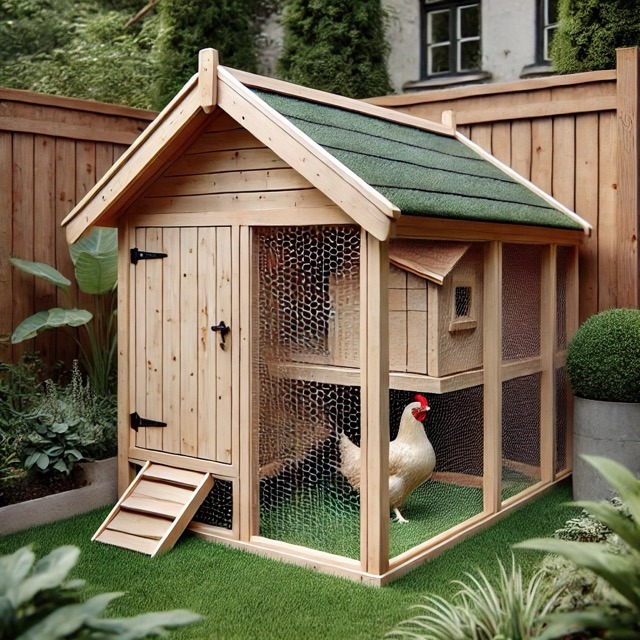
Raising chickens in your backyard can be a rewarding experience, providing fresh eggs, natural pest control, and endless entertainment. However, for those with limited outdoor space, choosing the right coop design can be challenging. You want to ensure your chickens are comfortable, safe, and happy without taking over your entire yard. Luckily, there are plenty of clever designs tailored for small backyards. In this post, we’ll explore some of the best chicken coop designs that maximize space without compromising on functionality.
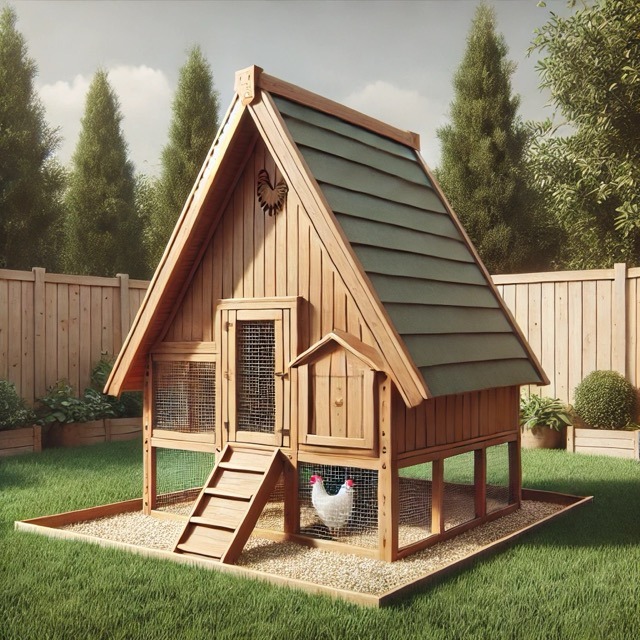
1. Compact A-Frame Coop
The A-frame chicken coop is a popular choice for small backyards due to its simple, space-saving design. Shaped like a triangle, this coop provides enough room for a small flock while taking up minimal ground space. The steep roof allows rain and snow to slide off easily, and the interior can be divided into a sleeping area and a small run. Many A-frame coops are also lightweight and portable, allowing you to move the coop around the yard to give your chickens fresh grass to forage.
Pros:
- Easy to move
- Simple design
- Great for small flocks (2-4 chickens)
Cons:
- Limited space for large flocks
- Minimal run space
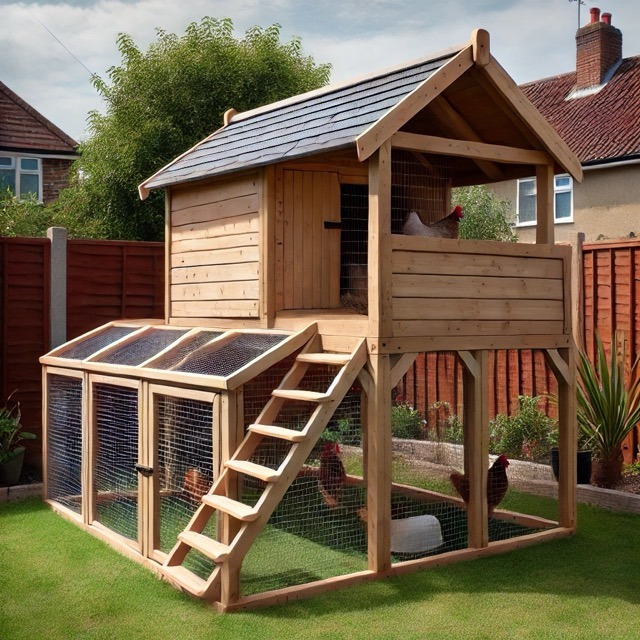
2. Elevated Coop with Run
Another fantastic option for small yards is an elevated chicken coop with a built-in run underneath. The coop is lifted off the ground, which creates more space for your chickens to roam below while keeping the interior compact. This design makes efficient use of vertical space, ideal for urban or suburban backyards. You can even add wheels to make it mobile, or use the shaded area under the coop for extra protection during hot summer days.
Pros:
- Maximizes vertical space
- Provides shade and protection for chickens
- Suitable for 3-5 chickens
Cons:
- Limited roaming space in the run
- May need additional run area for larger flocks
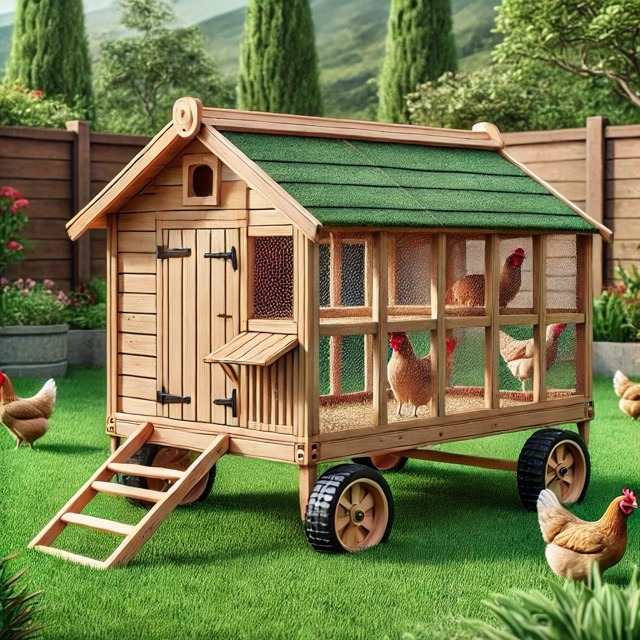
3. Chicken Coop Tractor
Chicken tractors are portable coops on wheels, allowing you to move your flock to different parts of your yard for fresh foraging and fertilization. These coops are typically lightweight and come with a small, enclosed area for the chickens to roost at night, along with an attached run. This design is perfect for those who want to provide their chickens with new grazing areas but have limited yard space.
Pros:
- Portable and mobile
- Provides fresh grazing areas
- Ideal for 2-4 chickens
Cons:
- Must be moved regularly to avoid damaging your lawn
- Usually smaller, so best for small flocks
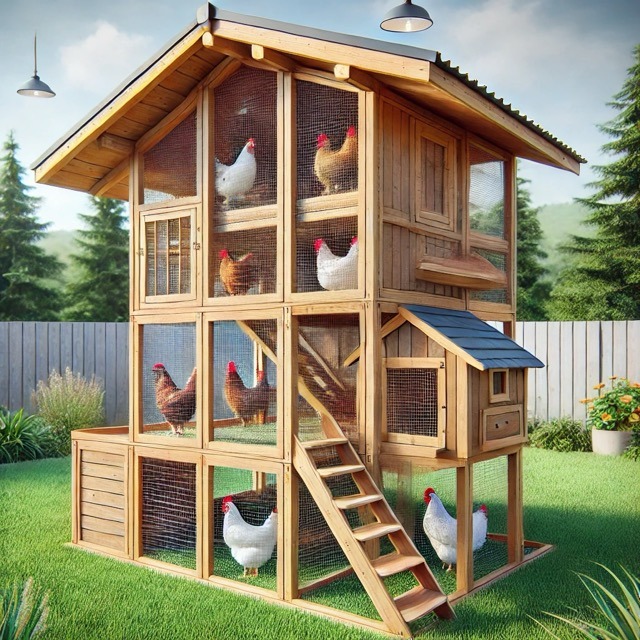
4. Multi-Level Coop
If you’re short on ground space but want to maximize your flock’s comfort, a multi-level chicken coop can be a great solution. These coops feature an upper level for roosting and nesting, while the lower level serves as a run. Some designs even include ramps or ladders for your chickens to move between levels. This vertical design is perfect for small backyards, as it allows your chickens to spread out without taking up much horizontal space.
Pros:
- Efficient use of vertical space
- Allows for natural chicken behaviors like climbing
- Suitable for 3-5 chickens
Cons:
- May require regular cleaning between levels
- Could feel cramped for larger breeds
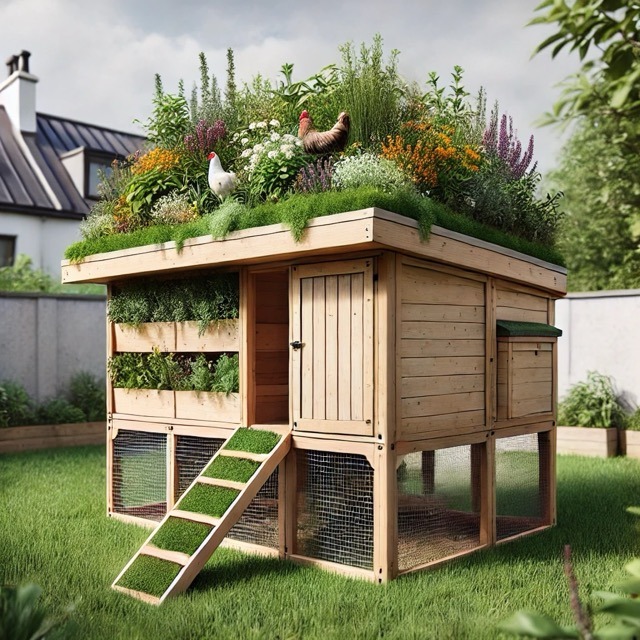
5. Urban Coop with Rooftop Garden
For the eco-conscious chicken keeper, an urban coop with a rooftop garden can be a space-saving and sustainable option. These coops are designed with a flat roof where you can grow herbs, flowers, or even vegetables. Not only does this provide extra green space in your backyard, but it also helps insulate the coop, keeping it cooler in the summer and warmer in the winter. The coop itself is compact but functional, with enough room for a small flock.
Pros:
- Dual-purpose design (coop + garden)
- Eco-friendly and space-saving
- Adds greenery to small yards
Cons:
- Requires maintenance of both the coop and garden
- Limited space for larger flocks
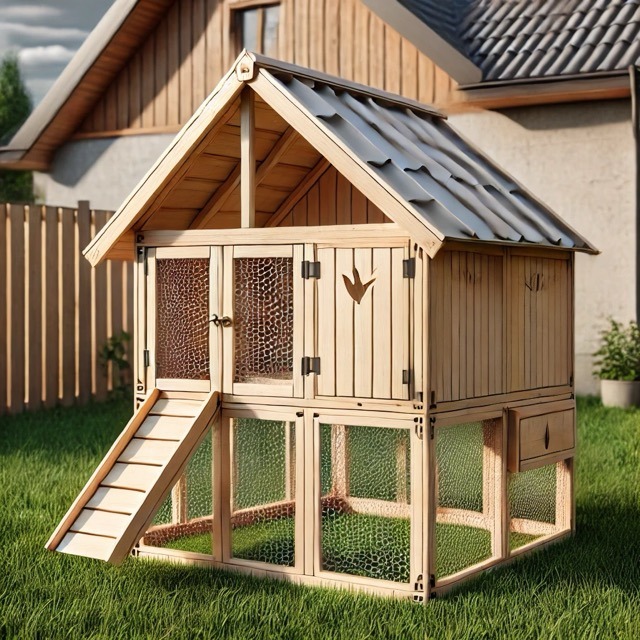
6. Foldable Coop
For those who need flexibility, a foldable chicken coop might be the answer. These coops are designed to collapse when not in use, freeing up valuable backyard space. Typically made of lightweight materials, they can be easily stored or moved, making them ideal for temporary or seasonal chicken keepers. While they’re not meant for large flocks, they work well for 2-3 chickens or as a secondary coop when needed.
Pros:
- Space-saving and easy to store
- Lightweight and portable
- Ideal for temporary use
Cons:
- Limited durability compared to permanent coops
- Small size, suitable for only 2-3 chickens
7. Corner Coop
If your backyard has an unused corner, why not transform it into a cozy space for your chickens? Corner coops are designed to fit snugly into the corner of a yard, maximizing space while providing ample room for your flock. These coops typically feature a triangular or L-shaped layout that allows for an efficient use of space while still giving your chickens access to the outdoors.
Pros:
- Efficient use of corner spaces
- Fits well in small backyards
- Provides both shelter and run space
Cons:
- Limited flock size
- May require custom building
Key Considerations for Small Backyard Chicken Coops
When selecting the best chicken coop design for your small backyard, it’s important to consider several factors:
- Flock Size: Ensure the coop has enough space for the number of chickens you plan to keep. The general rule is at least 3-4 square feet per chicken inside the coop and 10 square feet per chicken in the run.
- Ventilation: Even in small spaces, proper airflow is crucial to prevent overheating and reduce moisture buildup.
- Ease of Cleaning: Look for designs with easy access to the interior for cleaning, as small coops can get dirty quickly.
- Predator Protection: Make sure the coop is secure with locks and sturdy materials to keep your flock safe from predators.
Conclusion
Owning chickens in a small backyard is entirely possible with the right coop design. From compact A-frame coops to portable chicken tractors, there are plenty of options that can fit your space while keeping your chickens happy and healthy. By considering your flock size, yard layout, and maintenance needs, you can find the perfect coop that works for both you and your backyard chickens.
No matter which design you choose, remember that a well-designed coop is the foundation for a thriving, happy flock!
Using Artificial Lighting to Boost Egg Production in Winter
As the days get shorter and colder, you may wonder if using artificial lighting in your chicken coop is a good idea to keep egg production steady through winter. Let’s explore the pros and cons of this common debate among chicken keepers.
Egg Laying Basics
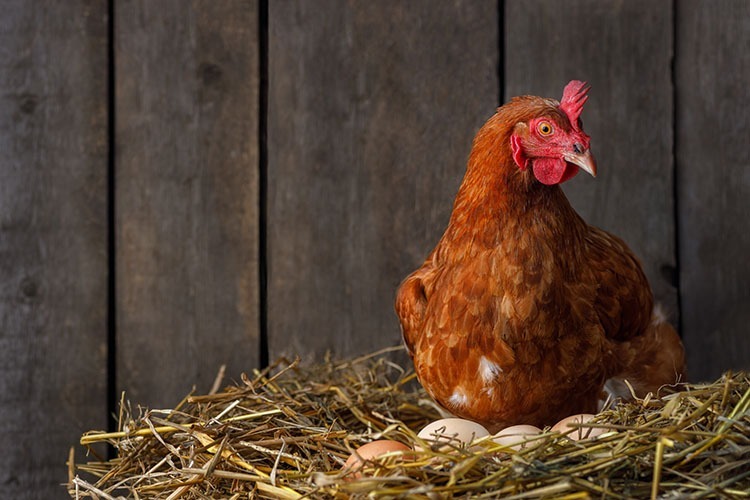
Hens naturally lay eggs when the days are longer, usually needing 12 to 14 hours of daylight for consistent egg production. The extra daylight stimulates their pituitary gland, which triggers their ovaries to produce eggs—usually one per day. But when daylight decreases in winter, so does egg production. That’s when many chicken keepers consider using artificial light to keep the eggs coming.
But should you?
The Big Debate: To Light or Not to Light?
In the warmer months, hens lay about one egg every 25 to 26 hours, producing up to 265 eggs per year. With artificial lighting, you could maintain this egg-laying pace all year long, even in winter. However, there are mixed opinions on whether this is healthy for your chickens in the long term.
Some argue that continuous egg production could lead to health issues like egg-binding, egg peritonitis, or even ovarian cancer. Others feel their hens deserve a break during the winter months to rest and recover. So, let’s weigh the pros and cons.
Pros of Using Artificial Lighting
- Year-round fresh eggs: You won’t have to buy eggs from the store, which often don’t taste as fresh as those from your backyard.
- More cost-effective for sellers: If you sell eggs, keeping up production in winter can help offset the higher feed costs when your chickens can’t forage as much.
Cons of Using Artificial Lighting
- Higher expenses: Artificial lighting adds costs for electricity, lightbulbs, and timers. Some chicken keepers feel the cost of maintaining lighting outweighs the benefits of a few extra eggs.
- Hens need rest: Many believe that after laying 265 eggs a year, hens deserve a break. Skipping artificial light allows them to rest during the darker months, potentially improving their health and longevity.
Is There a Middle Ground?
If you’re torn, there’s a compromise. You could allow your hens to rest during their fall molt, when they use a lot of energy to grow new feathers. Then, as the days begin to lengthen after the winter solstice, you could gradually introduce artificial light, adding 30-60 minutes of light each week in the early morning. This way, you can ease your hens back into laying before spring fully arrives without overworking them.
The Bottom Line
Ultimately, the decision is yours. Whether you choose to use artificial lighting or let your hens take a winter break, the most important thing is to do what feels right for your flock. With time and experience, you’ll find the best balance for happy, healthy chickens.
How and When to Clean a Backyard Chicken Coop: A Step-by-Step Guide
Keeping your backyard chicken coop clean is essential for maintaining a healthy and happy flock. Regular cleaning helps prevent disease, reduces bad odors, and ensures that your chickens have a comfortable environment to live in. Whether you’re new to chicken keeping or a seasoned pro, this guide will walk you through how to properly clean your coop.
Why Clean Your Chicken Coop?
Chickens produce a lot of waste, and their bedding can quickly become soiled. Over time, this can lead to harmful ammonia buildup, attracting pests and fostering bacteria that can cause illness in your chickens. Regular coop cleaning is a preventive measure that keeps your flock healthy and your backyard pleasant.
How Often Should You Clean?
The frequency of cleaning depends on the size of your coop and the number of chickens you have. On average, you should:
- Spot-clean weekly: Remove droppings and replace dirty bedding.
- Deep-clean every 1-3 months: Remove all bedding, scrub surfaces, and thoroughly disinfect.
For smaller coops or densely populated ones, you may need to clean more frequently. Larger coops with fewer chickens can often go a bit longer between deep cleans.
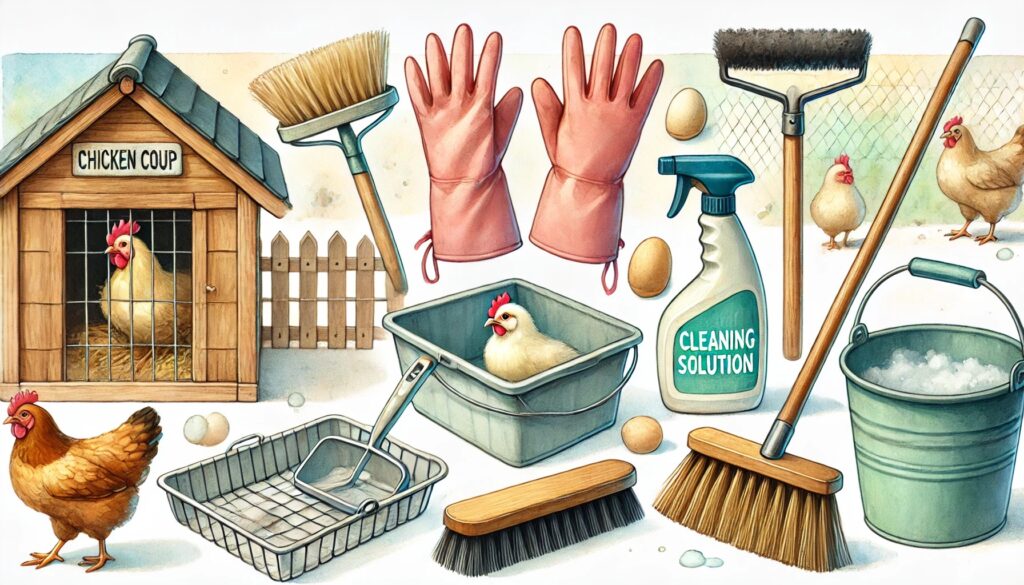
What You’ll Need:
- Protective gear: Gloves, a dust mask, and old clothes
- Shovel or scraper: To remove droppings and bedding
- Broom and dustpan: For sweeping
- Hose or pressure washer: For rinsing surfaces
- Scrub brush: To scrub perches and walls
- Non-toxic cleaner: Vinegar and water mixture works well, or a poultry-safe disinfectant
- Fresh bedding: Straw, wood shavings, or sand, depending on your preference
Step-by-Step Cleaning Process
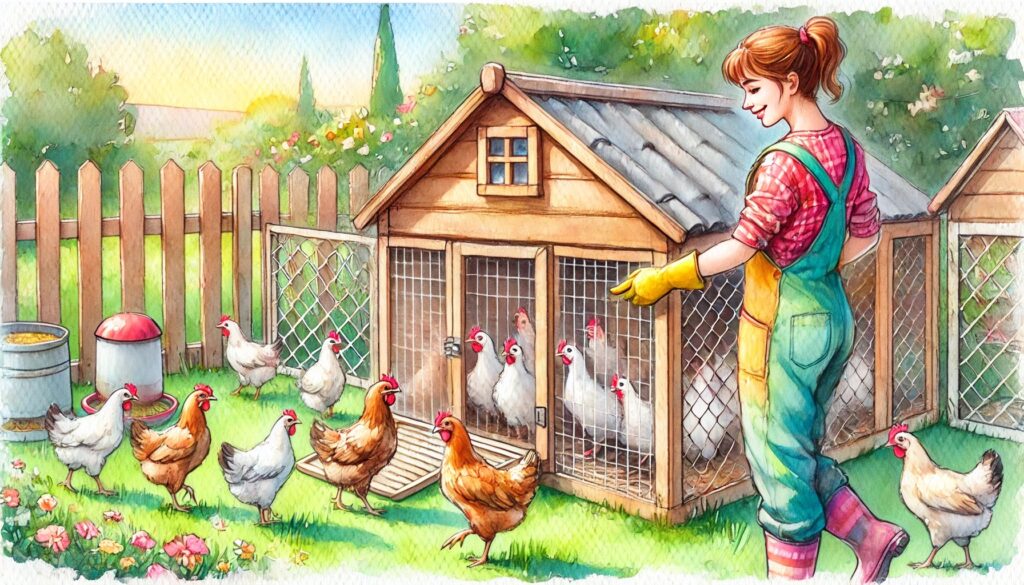
- Prepare the Area Before cleaning, make sure your chickens are safely outside in a run or a temporary enclosure. This allows you to clean thoroughly without disturbing them.
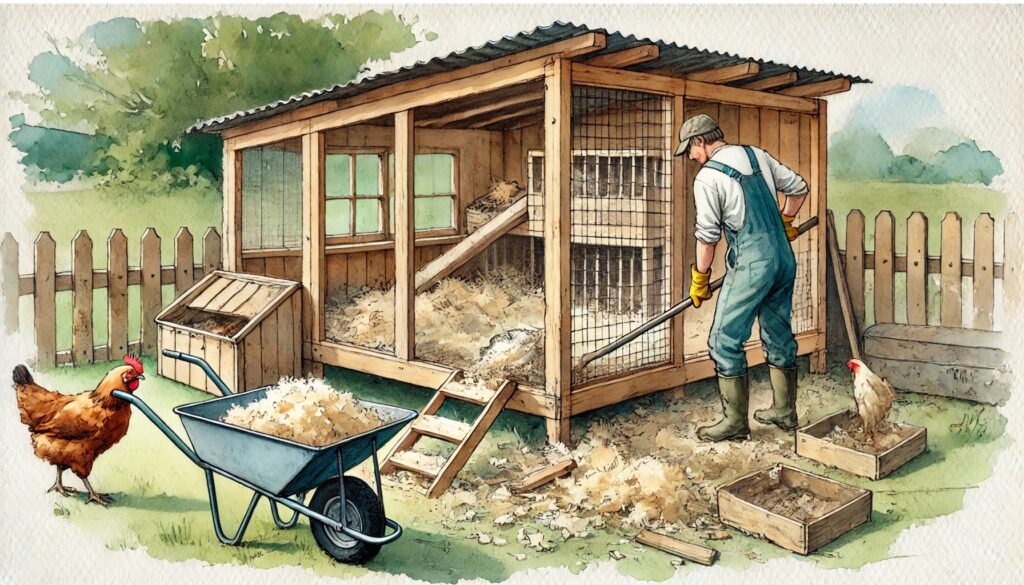
- Remove Old Bedding Start by scooping out all of the old bedding from the floor, nesting boxes, and any corners where it may have accumulated. Use a shovel or scraper to remove stubborn clumps of droppings. If your coop has a dropping tray, remove it and empty the waste.
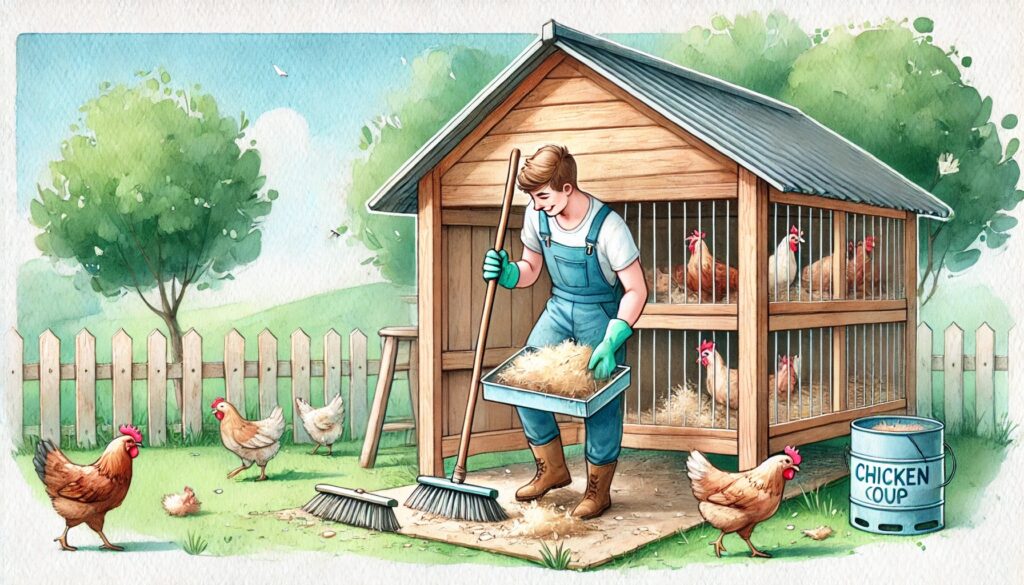
- Dust and Sweep Using a broom, sweep out the remaining debris, dust, and feathers from the coop. Make sure to clean out hard-to-reach areas such as corners, under perches, and in cracks where mites and other pests may hide.
- Scrub Surfaces Fill a bucket with a solution of warm water and white vinegar (or a poultry-safe cleaner). Using a scrub brush, thoroughly clean the perches, walls, and any other surfaces your chickens come into contact with. Pay special attention to areas with a heavy buildup of droppings, as these are breeding grounds for bacteria.For stubborn dirt, a hose or pressure washer can be helpful, but be careful not to soak any wood excessively, as this can lead to mold growth.
- Rinse and Dry After scrubbing, rinse all surfaces with clean water and let the coop air out. It’s important that the coop dries completely before adding fresh bedding to prevent mold and mildew from developing.
- Disinfect and Deodorize Once the coop is dry, spray down surfaces with a poultry-safe disinfectant or a vinegar solution to eliminate any lingering germs. For added freshness, sprinkle a layer of diatomaceous earth or baking soda on the floor before adding new bedding. This helps absorb moisture and control odors.
- Replace Bedding Add fresh bedding to the floor, nesting boxes, and any areas where your chickens roost. Wood shavings and straw are popular options, but some chicken keepers prefer sand for its ease of cleaning and odor control.
- Check Feeders and Waterers While you’re cleaning the coop, take a moment to wash your chickens’ feeders and waterers. Scrub them thoroughly with soap and water, and refill them with fresh feed and clean water.
- Inspect the Coop for Repairs As you clean, inspect your coop for any signs of wear or damage. Check for broken boards, loose screws, or any gaps where predators might get in. Repairing these issues promptly ensures your chickens stay safe and secure.
Helpful Tips:
- Use a Deep Litter Method: If you’re looking for a way to reduce how often you clean, consider the deep litter method. By allowing the bedding to compost over time, you only need to remove droppings occasionally, and a full deep-clean is required less frequently.
- Keep a Cleaning Routine: Creating a schedule for regular cleaning helps prevent the buildup of waste and keeps your coop manageable. Spot-clean weekly, and deep-clean every few months.
- Choose the Right Bedding: Different bedding materials offer different benefits. Wood shavings are absorbent and control odors well, while straw is a good insulator. Sand can be scooped like cat litter for easy cleaning.
Conclusion
A clean chicken coop is key to a healthy flock. By following this guide and establishing a regular cleaning routine, you’ll keep your chickens happy, healthy, and comfortable. Plus, your coop will stay fresh and inviting for you as well!
Happy cleaning! 🐔